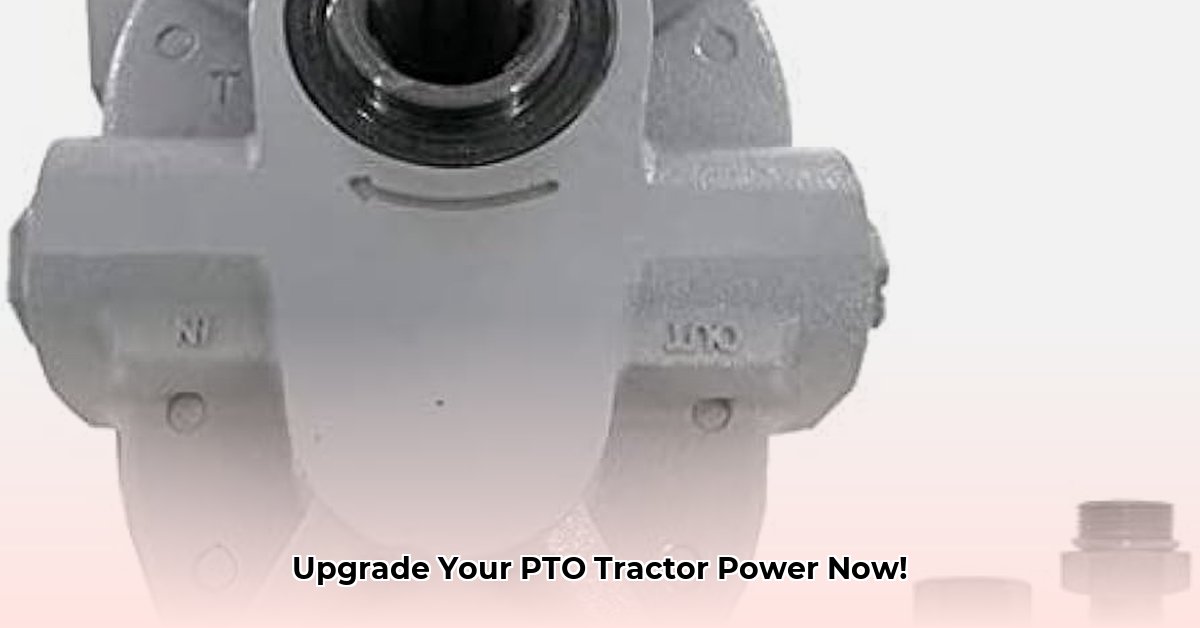
Understanding PTO Hydraulic Pump Systems
Choosing the right PTO (Power Take-Off)-driven hydraulic pump for your agricultural needs is crucial for efficiency and productivity. This guide provides a comprehensive overview, helping you select, install, and maintain your pump. A PTO hydraulic pump converts the mechanical power from your tractor's PTO shaft into hydraulic power—pressurized fluid—that drives various implements. For more in-depth information, see this helpful resource.
Key Hydraulic System Terminology
Before we delve into pump selection, let's clarify some key terms:
- Flow Rate (GPM): The volume of hydraulic fluid pumped per minute (gallons per minute). Higher GPM means faster implement operation. Think of it like the water flow from a hose; a higher GPM means a stronger flow.
- Pressure (PSI): The force exerted by the hydraulic fluid (pounds per square inch). Higher PSI is needed for heavier tasks. It's similar to the force you exert when pushing a plunger; higher PSI means greater pushing power.
- Horsepower (HP): The power your tractor needs to run the pump effectively. Ensure your tractor possesses sufficient HP to avoid overloading. This is analogous to matching your car's engine power to its weight; you need enough power for smooth operation.
Types of PTO Hydraulic Pumps
Gear pumps are the most common type in agricultural applications due to their simplicity, reliability, and cost-effectiveness. They efficiently translate the rotational power of your tractor's PTO into hydraulic pressure. Other pump types exist but are less prevalent in this context.
Tractor PTO and Pump Compatibility
Ensure compatibility between your tractor's PTO specifications (horsepower and RPM) and the pump's requirements. Overloading the pump can lead to premature failure. Always consult your tractor's manual to verify PTO specifications. A mismatch could severely impact performance and longevity. Don't underestimate the importance of this step!
Comparative Analysis of PTO Pumps
Direct comparison of various PTO pump models is challenging due to inconsistent data availability from different manufacturers. However, we can highlight key factors for consideration, using hypothetical examples to illustrate the decision-making process.
| Feature | Model X | Model Y | Model Z | Considerations |
|---|---|---|---|---|
| Flow Rate (GPM) | 15-20 | 25-30 | 10-15 | Match the flow rate to your implement's needs. Larger implements need higher GPM. |
| Pressure (PSI) | 2000-2500 | 2500-3000 | 1500-2000 | Higher pressure isn't always better; overly high pressure can damage implements. |
| HP Requirement | 15-20 | 20-25 | 10-15 | Ensure your tractor's PTO can handle the pump's demands. |
| Material | Cast Iron | Aluminum | Cast Iron | Cast iron offers superior durability; aluminum is lighter but may be less durable. |
| Price (USD) | $1500-$1800 | $1800-$2200 | $1200-$1500 | Consider the balance between performance, durability, and budget. |
| Warranty (Years) | 2 | 1 | 2 | Longer warranties offer increased peace of mind. |
(Note: Prices and specifications are for illustrative purposes only. Consult manufacturers for exact figures.)
Factors Influencing Pump Selection
Choosing the optimal PTO hydraulic pump involves a multifaceted assessment:
Implement Type and Size: The pump's capacity must match the implement's requirements. A large sprayer necessitates a higher GPM and PSI pump than a smaller tiller. Did you know that 75% of pump failures are due to mismatched capacity?
Budget: Set a realistic budget to narrow down your options. While cost is a factor, don't compromise on quality or essential features.
Operating Conditions: Dust, mud, and extreme temperatures affect pump lifespan. Choose pumps with features suited to your environment. Consider pumps with superior sealing systems for harsh environments.
Tractor PTO Specifications: Verify your tractor's PTO horsepower (HP) and RPM to ensure compatibility. Improper matching could damage both the tractor and pump, costing you time and money.
Maintenance Accessibility: Evaluate ease of maintenance and part availability. A pump requiring frequent, difficult maintenance can be surprisingly costly in the long run.
Installation and Maintenance
Careful installation is paramount. Follow the manufacturer's instructions precisely. Secure all connections; improper installation can lead to leaks or failure. Regular maintenance involves checking fluid levels, inspecting for leaks, and replacing hydraulic fluid as recommended. Remember safety precautions; always disengage the PTO and relieve pressure before working on the system. Ignoring this could lead to serious injury.
Troubleshooting Common Problems
Common issues include:
- Low Pressure: Check fluid levels, inspect for leaks, and verify pump functionality.
- Leaks: Repair or replace damaged hoses and fittings. Regular inspection will save costly repairs later.
- Overheating: Ensure adequate ventilation and check fluid levels.
Consult your owner's manual for detailed troubleshooting procedures.
Conclusion: Optimizing Your Agricultural Operation
Selecting the right PTO-driven hydraulic pump is key to efficient, productive farming. By carefully considering your needs, researching models, and conducting routine maintenance, you can ensure a long-lasting, effective hydraulic system that will benefit your farm for years to come. Remember, consulting with agricultural equipment specialists can provide valuable tailored advice.